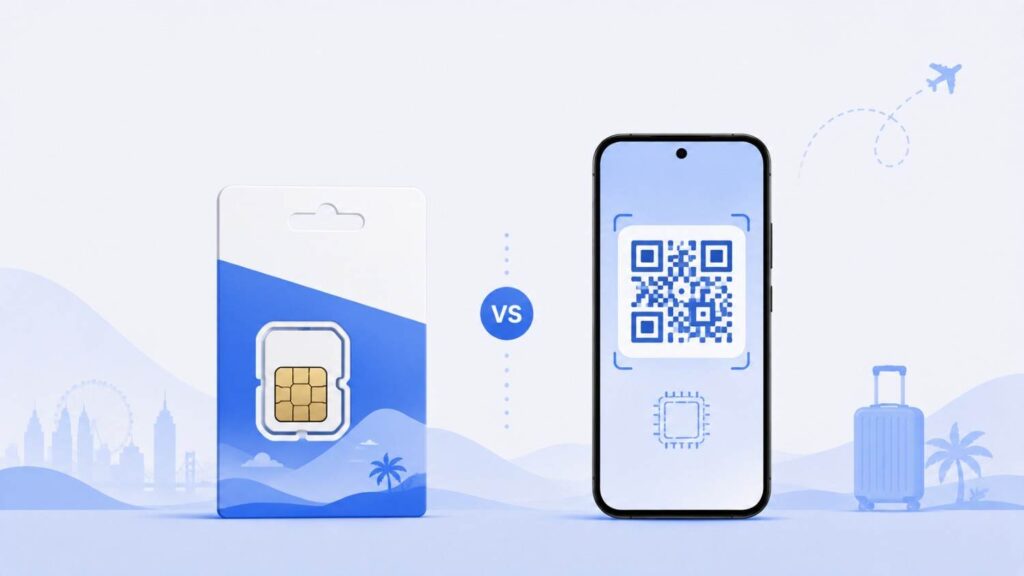
Portable WiFi devices, sometimes called pocket WiFi or MiFi devices, are another option travelers consider for staying connected in the US. They work differently from an eSIM, and the right choice often depends on how many devices you need online and how you like to manage your connectivity.
What a Portable WiFi Device Actually Does
A portable WiFi device is a small standalone gadget with its own SIM card and battery. It connects to a cellular network and creates a local WiFi hotspot that your phone, laptop, tablet, or other devices can join. You’re not connecting your phone directly to a carrier — you’re connecting to the device, which handles the cellular connection itself.
What an eSIM Does Differently
A USA eSIM installs directly on your phone (or eSIM-compatible tablet), connecting that specific device straight to the carrier network. There’s no separate hardware to carry, charge, or manage.
Carrying an Extra Device
Portable WiFi: Requires carrying, charging, and keeping track of a separate physical device throughout your trip, in addition to your phone.
eSIM: No additional hardware. Your existing phone handles everything.
Connecting Multiple Devices
Portable WiFi: Designed specifically to connect multiple devices at once — useful if you’re traveling with a laptop, tablet, and phone that all need internet simultaneously, or traveling as a group sharing one device.
eSIM: Primarily connects the single device it’s installed on, though many eSIM-compatible phones can share their connection with other devices through mobile hotspot, depending on the specific plan’s hotspot support.
Battery Life Considerations
Portable WiFi: Has its own battery, separate from your phone, which can be useful for extending your phone’s battery life if you’re using data heavily. It also means one more device to remember to charge.
eSIM: Uses your phone’s existing battery, so heavy data use affects your phone’s battery life as it normally would.
Cost Comparison
Portable WiFi devices are often rented for the duration of a trip, with rental fees plus data charges, or purchased outright with a prepaid data plan. eSIM plans are typically a single upfront cost for a defined validity period, with no separate device to rent or return. Compare the total cost of each option, including any rental or device fees, rather than data pricing alone.
Which Makes Sense for Solo Travelers?
For a single traveler mainly using one phone, an eSIM is usually simpler, since there’s no extra device to manage, charge, or return at the end of the trip.
Which Makes Sense for Groups or Multiple Devices?
If you’re traveling with several people who need to share one data connection, or you personally need several devices (laptop, tablet, phone) online at once without relying on your phone’s hotspot, a portable WiFi device can make more practical sense.
Frequently Asked Questions
Can I use my phone’s hotspot instead of a portable WiFi device?
Depending on your eSIM plan’s hotspot support, yes. Check your specific plan’s features to confirm hotspot or tethering is included.
Do I need to return a portable WiFi device after my trip?
If it’s a rental, yes, typically by mail or at a designated return point. If purchased outright, no return is required.
Is portable WiFi more reliable than eSIM in remote areas?
Reliability depends on which cellular network the specific device or eSIM connects to, not the format itself. Check coverage details for either option in the specific areas you’re visiting.