Prepaid SIM cards have long been a popular option for travelers who want local connectivity without a contract. With eSIM now widely supported, it’s worth understanding how the two actually compare, beyond just the physical-versus-digital difference.
What a Prepaid USA SIM Actually Is
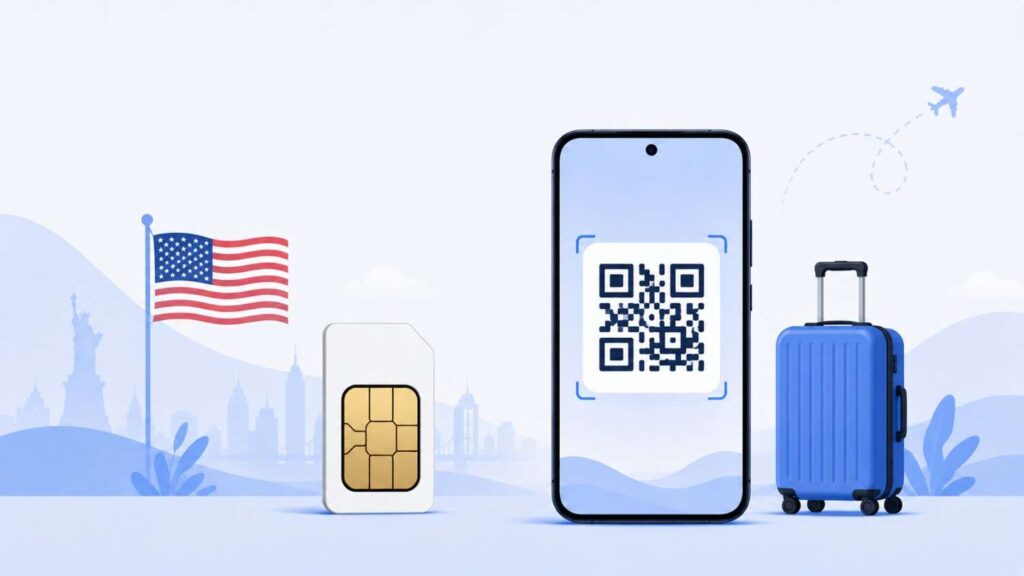
A prepaid SIM is a physical card, typically sold by a US carrier or reseller, that you buy without a long-term contract. You pay upfront for a set amount of data, talk, and text, and the service ends when your balance or validity period runs out. You physically insert the card into your phone.
What a USA eSIM Actually Is
A USA eSIM works on the same prepaid principle — no contract, a fixed plan for a set period — but it’s delivered and activated entirely digitally, with no physical card involved.
Where You Buy Each One
Prepaid SIM: Typically purchased in person at a carrier store, pharmacy, convenience store, or airport kiosk after you arrive, though some can be ordered online and shipped in advance.
eSIM: Purchased entirely online, before or after you arrive, with no physical shipping or in-person purchase required.
Setup Differences
Prepaid SIM: Requires physically swapping your existing SIM out, which may mean losing access to your home number until you swap back.
eSIM: Installs alongside your existing SIM on most modern phones, so your home number stays active throughout.
Which Requires ID or Registration?
Some prepaid SIM purchases in the US require identification or registration, depending on the carrier and local regulations. eSIM purchase requirements vary by provider, so check the specific terms of whichever option you’re considering.
Coverage and Network Quality
Both prepaid SIMs and eSIMs typically connect through the same major US carrier networks. Coverage and speed depend more on which specific network the plan uses, rather than whether it’s delivered as a physical card or digitally.
Which Is Better for Short Trips?
For very short trips, the deciding factor is usually convenience rather than cost. If you don’t want to deal with finding a physical retailer after a long flight, an eSIM you’ve already purchased and can activate on arrival is generally simpler.
Which Is Better for Extended Stays?
For longer stays, compare the actual plans available in each format rather than assuming one is automatically better. Some prepaid SIM plans offer larger data allowances for extended use, while some eSIM providers offer similar or better options digitally. Check specifics rather than assuming based on format alone.
Frequently Asked Questions
Can I switch from a prepaid SIM to an eSIM mid-trip?
Yes, as long as your phone supports eSIM. You can purchase and activate an eSIM at any point during your trip.
Do prepaid SIMs expire the same way eSIM plans do?
Yes, most prepaid SIMs have a set validity period, similar to eSIM plans, after which you’ll need to top up or purchase a new plan.
Is one option more secure than the other?
An eSIM is tied to your specific device and can’t be physically removed if your phone is lost or stolen, which some travelers see as a security advantage over a physical SIM.